
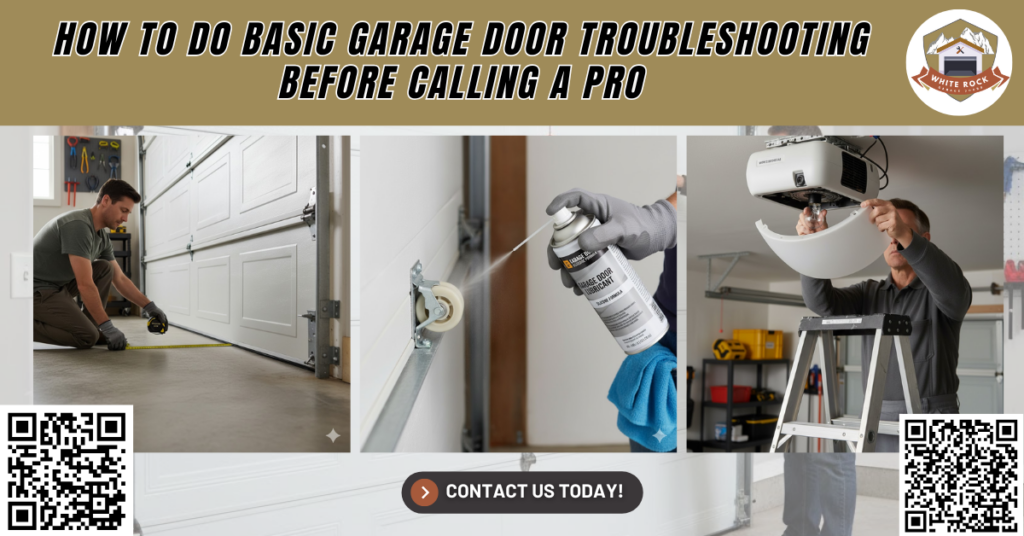
Picture this. You press your remote, the garage door groans halfway up, and then freezes like it forgot what to do next. Your car is stuck inside, you are already late, and the door is making a sound that feels like an angry robot chewing gravel. That moment is stressful, but it is also the perfect time to slow down and do a few safe checks. Many problems look scary at first, yet some are small and easy to spot.
At White Rock Garage Doors here in Dallas, we see this all the time. One afternoon near North Central Expy, a homeowner called us, sure they needed a whole new opener. When we arrived, our technician found the real issue in two minutes. A storage box had slid in front of the safety sensor, so the opener thought something was in the way. We moved the box, wiped the lens, and the door worked normally again. The customer was relieved and also a little surprised. They said, “I wish I knew that before panicking.” That is exactly why this guide exists.
Garage door troubleshooting is not about turning you into a full-time technician. It is about helping you spot the simple, safe issues before you spend money or risk getting hurt. A garage door system is heavy, high-tension, and powerful, so there are limits to what a homeowner should do. But there are also smart steps you can take to understand what is going on, protect your home, and decide when it is time to call a pro.
Why Basic Troubleshooting Matters
Your garage door is the largest moving object in your home. It depends on many parts working together. Springs carry most of the weight, rollers ride on tracks, cables lift evenly on both sides, and the opener guides the motion with sensors to keep people safe. When one piece is off, the whole system can act weird.
Doing basic troubleshooting helps you in three big ways.
- First, it can save you time. If the fix is something simple like a dead remote battery, you can solve it fast.
- Second, it can save you money. If you can describe the problem clearly to a technician, the repair is usually quicker. That means less labor time and fewer surprise costs.
- Third, it keeps you safe. A door that is stuck, crooked, or falling too fast can cause serious damage. Even if you do not fix it yourself, recognizing danger early helps you prevent accidents.
You might even feel a little like a sawhorse member in a building forum, using good code knowledge to protect your home. Some homeowners love to search for welcome guides and share resource knowledge with the community thriving around home care. While you do not need exclusive features or enhanced access to do these checks, a little information goes a long way.
Know the Parts Before You Start
You do not have to memorize everything. But knowing the basic parts helps you understand what you are seeing.
- Garage door panels. The big sections you see from the outside.
- Tracks. Metal rails on both sides. Rollers travel inside them.
- Rollers. Small wheels are attached to the door.
- Hinges. Connect panels and allow bending.
- Springs. High-tension parts that counterbalance the door. Most doors have torsion springs above the door or extension springs along the sides.
- Cables. Steel lines attached to the bottom brackets, lifting evenly.
- Opener. Motor unit on the ceiling plus rail, trolley, and arm.
- Safety sensors. Two small eyes are near the bottom of the tracks, usually 4 to 6 inches above the floor.
- Weather seal. Bottom seal and side and top weatherstripping to block drafts, water, pests, and dust.
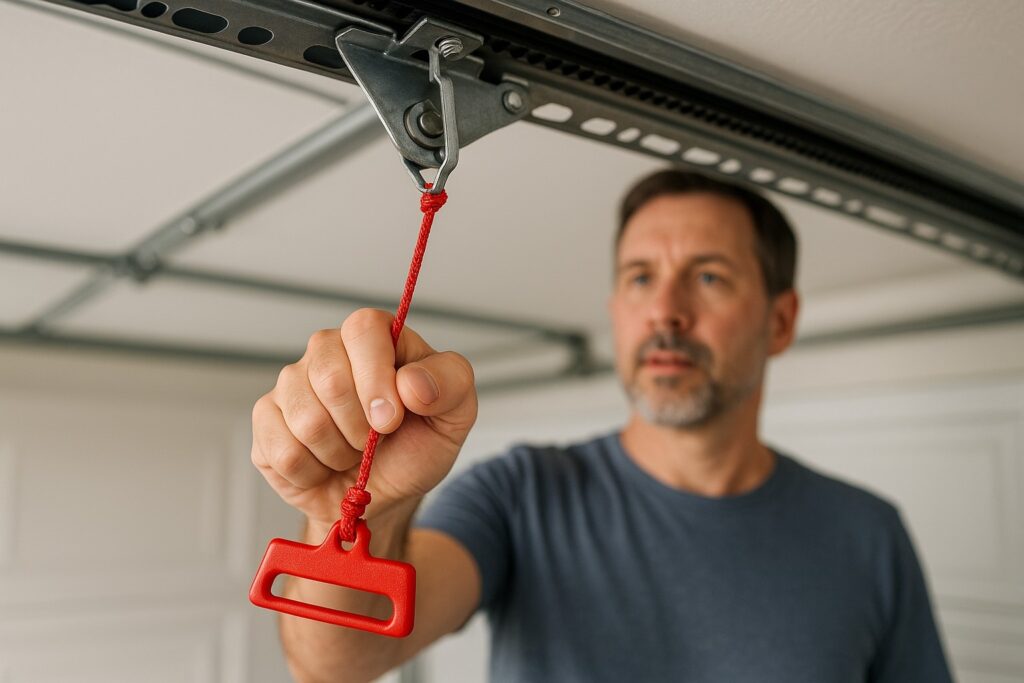
- Emergency release cord. Red handle that disconnects the door from the opener.
Think of these like a team. If one member is injured, the whole group struggles. In some online discussions, you might see names like Uncle Bob, Joe.b, Steveray, or Glennman CBO Silver advising about garage door headers, building code, and pedestrian door size. The key takeaway is this. The system depends on balance and alignment. Most trouble comes from those two things being off.
Safety Rules You Must Follow
Before we go any further, here are the rules that keep you out of danger.
- Never touch or loosen springs, cables, or bottom brackets. Springs store huge energy. If they snap or unwind, they can cause serious injury.
- Do not put fingers between door sections. Hinges pinch fast.
- Keep kids and pets away while checking.
- If the door is off track, crooked, or hanging, stop. Call a pro.
- Use a sturdy step ladder, not a chair.
- Wear eye protection and gloves if you are cleaning or tightening small hardware.
A garage door can weigh 150 to 300 pounds. Only a balanced spring system makes it feel light. If balance is lost, the door becomes a falling threat. Treat it like a heavy car hood overhead, because that is what it is.
Step One: Check the Simple Power Issues
When a door will not move at all, start with power.
Check the opener
- Is the opener plugged in
- Is the outlet working? Try plugging a lamp in to test.
- Look at the opener lights. Most openers blink a code when something is wrong.
Check the breaker
Sometimes a circuit trips after a storm or power surge. Flip it off and on again.
Check the remote and the wall button
- Replace remote batteries.
- If the wall button works but the remote does not, it is almost always the remote battery or a programming issue.
- If neither works, focus on power or sensors.
This is like the EnergyStar idea in building code discussions. Always check your energy source before blaming the machine.
Step Two: Look for Sensor Problems
Safety sensors stop the door from closing on people, pets, or cars. They are a common cause of trouble.
Signs of a sensor issue
- Door starts to close, then reverses.
- Door will not close unless you hold the wall button down.
- You see a blinking light on the opener.
What to do
- Inspect both sensors at the bottom of the track.
- Make sure nothing blocks them. Even a broom handle or storage bin can trigger them.
- Wipe the lenses with a soft dry cloth.
- Check alignment. Each sensor should face the opposite one directly.
- Look for a steady light on both sensors. Most brands show solid green or amber when aligned.
If you have ever read a forum with a moderator like sawhorse ice moderator, you know how small details matter. A tiny bump can knock a sensor out of line.
Step Three: Check the Track and Rollers
If the door is noisy, jerky, or stuck halfway, look at the track path.
What to look for
- Dents or bends in the track.
- Dirt, leaves, or hardened grease in the track.
- Rollers that look cracked, worn, or loose.
- Gaps between rollers and track.
Safe actions you can take
- Clean tracks with a dry cloth. Do not grease inside the track.
- Tighten loose track bolts with a wrench if they are easy to reach and not connected to spring hardware.
- Add a small amount of garage door lubricant to rollers and hinges. Use a product made for garage doors, not thick car grease.
If a roller pops out or the track is badly bent, stop right there. A door off track can drop fast.
Step Four: Listen to the Door
Sounds are clues.
- Grinding or scraping often means track friction, dirt, or a roller problem.
- Loud bang like a firecracker can mean a broken spring.
- Squealing usually means dry rollers or hinges.
- Clicking from the opener but no movement can mean a stripped gear or a jammed trolley.
Try operating the door while standing inside the garage. Watch and listen carefully. Do not stand under the door.
Step Five: Use the Emergency Release Test
This test tells you whether the problem is in the door or the opener.
How to do it
- Close the door fully if you can.
- Pull the red emergency release cord.
- Lift the door by hand.
What are you checking
- If the door lifts smoothly and stays halfway open, the door and springs are likely fine. The opener may be the issue.
- If the door feels very heavy, slams down, or will not lift, the spring system is not balancing it. That is a pro job.
- If it binds or jerks, tracks or rollers may be causing friction.
After the test, reconnect the opener by pulling the release cord toward the opener or running the opener until it catches the trolley.
Step Six: Spot Common Spring Trouble
Springs are the heart of balance. If they fail, the door becomes dangerous.
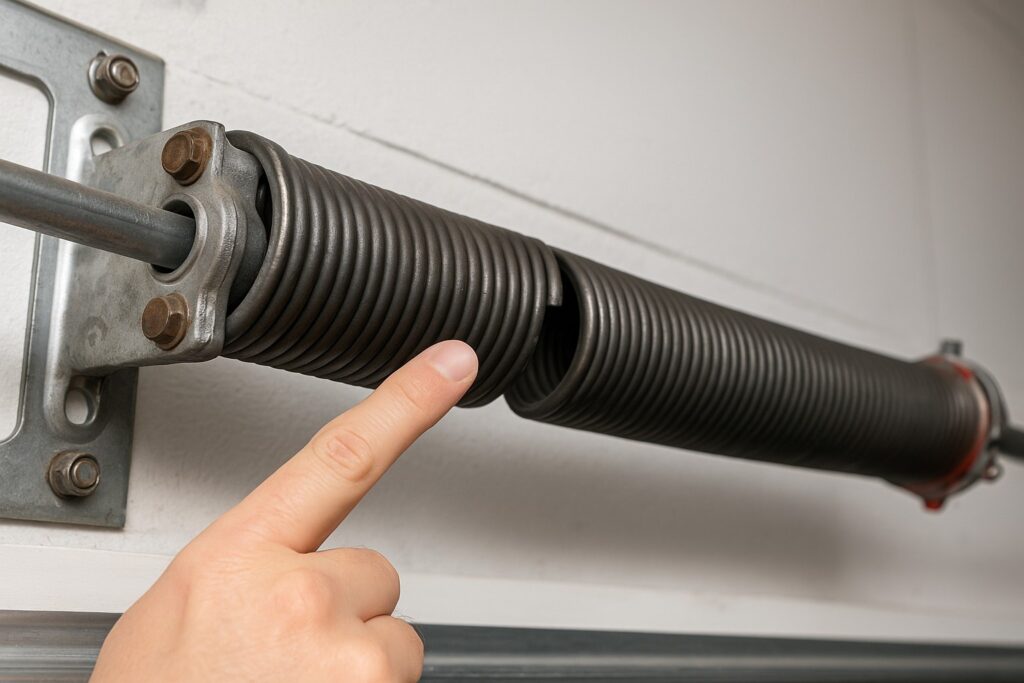
Signs of a broken torsion spring
- A visible gap in the spring above the door.
- Door only lifts a few inches and then stops.
- Door feels extremely heavy by hand.
- Cables look loose.
Signs of extension spring trouble
- A spring hanging down on one side.
- Uneven door movement.
- Loud snap sound.
Do not try to replace springs yourself. This is where professional training matters most.
Step Seven: Check the Cables and Bottom Area
Cables help lift evenly. If one slips or frays, the door can tilt.
What to watch for
- Frayed strands.
- Cables loose or off the drum.
- Door is rising unevenly.
If you see cable damage, do not touch it. A cable under tension can whip.
Also, check the bottom seal. If the seal is worn, you may get drafts, water, pests, or dust. That is not a safety emergency, but it is good preventive care.
Step Eight: Troubleshoot the Opener Itself
If the door is balanced but still not working, the opener could be the issue.
Check the opener settings
- Limit settings control how far the door travels up and down. If the limits are off, the door may stop early or reverse.
- Force settings control how much push the motor gives. Too low can cause stopping; too high is unsafe.
Most models have small adjustment screws or digital menus. If you are not sure, do not change force settings. It is safer to call a technician.
Check the opener rail
- Look for a bent rail.
- See if the trolley is stuck.
- Check for loose bolts on the opener bracket.
Common opener issues
- Stripped gears in older openers.
- Worn capacitor or motor.
- Logic board failure after surges.
A technician can test these quickly.
Step Nine: When the Door Freezes in Cold or Heat
Dallas weather may not bring high desert ice often, but we do get big temperature swings and storms. Extreme temperatures affect metal and rubber.
Winter issues
- Stiff grease makes rollers move poorly.
- Bottom seal can freeze to the floor.
Summer issues
- Tracks expand slightly, making alignment tighter.
- Opener overheats if used too often.
If the seal is frozen, use warm water around the bottom edge. Do not chip ice with tools.
Step Ten: Check for Minor Hardware Problems
Hardware loosens over time from vibration.
Safe tightening points
- Hinges that are not connected to spring brackets.
- Track support bolts.
- Opener mounting bolts.
Do not overtighten. You want snug, not crushed metal.
Think of this like following building code r311.1 or other code knowledge. Small checks keep the whole system safer for a lifetime.
Step Eleven: Recognize the High Risk Situations
Stop immediately and call a pro if you see any of these.
- Door off track.
- Door is hanging crooked.
- Broken spring.
- Frayed cable.
- Door slams down.
- Opener smoking or smelling like burning.
- Top panel cracked near the hinges.
- Loud repeated banging on the movement.
These problems are not DIY. They risk injury, property damage, and bigger repair costs.
Preventive Maintenance That Reduces Problems
Good maintenance prevents most emergencies.
Monthly quick routine
- Listen for changes in noise.
- Check sensors and wipe lenses.
- Look at rollers and hinges for wear.
- Test the balance using the emergency release.
- Check weatherstripping and bottom seal.
Every six months
- Lubricate rollers, hinges, and springs lightly.
- Tighten easy hardware.
- Clean around tracks and sweep debris away.
Once a year
Have a professional tune-up and safety inspection. We look at spring tension, cable condition, track alignment, opener force, and full system safety.
In a thriving community of homeowners, sponsors, and members often say, “Maintenance is cheaper than repairs.” They are right.
Real World Examples of Troubleshooting Wins
Here are a few situations we have handled in Dallas and nearby areas.
- A door would not close at night. The homeowner did basic checks and noticed the sensor light blinking. Turns out a spider web was covering one lens. They cleaned it and were back in business.
- A parking garage door in a commercial building kept reversing. Our inspection found the limit setting was too high. We reset the limits, and the door stopped slamming.
- A family heard a loud bang and could not open the door. They correctly recognized a spring break and did not touch anything. We replaced both torsion springs safely and restored balance.
The point is not that you fix everything. The point is that you recognize what is happening and make safe choices.
Frequently Asked Questions (FAQs)
1. Why does my garage door sometimes open or close by itself?
This usually happens because a remote or wall button is stuck, a neighbor’s remote is on the same frequency, or the opener’s circuit board is glitching. If it keeps happening, unplug the opener and call a technician to prevent a security risk.
2. Can I upgrade my garage door opener to work with a smartphone app?
Yes, many openers can be upgraded with a smart hub or Wi-Fi add-on, and some older models may need a full opener replacement for safe compatibility. A pro can confirm if your current unit supports smart controls and install it correctly.
3. What kind of lubricant is safest for garage doors?
Use a garage door-specific silicone or lithium-based spray, not heavy grease or WD-40, because thick products attract dirt and can gum up rollers and hinges. Look for a lubricant labeled for doors, tracks, rollers, and springs.
4. How much does professional troubleshooting usually cost in Dallas?
Most companies charge a service or diagnostic fee, often applied toward the repair if you proceed, and the final price depends on parts like springs, rollers, or openers. Calling for a quote with your symptoms is the best way to get a clear local estimate.
How Can White Rock Garage Doors Help You?
If your troubleshooting leads you to a clear fix, awesome. But if you discover a risky issue, or if the door still will not work right, we are here for you.
White Rock Garage Doors is a trusted garage door repair and service team based in Dallas, TX. We handle residential garage doors and commercial garage door systems, including overhead doors, parking garage doors, and custom installations. Whether you need broken spring replacement, opener repair, track alignment, cable replacement, roller upgrades, or a full new garage door installation, our trained technicians can do it safely and efficiently.
You can visit us at 11615 N Central Expy, Dallas, TX 75243. Call us anytime at (214) 296-9993 to schedule service, request a free quote, or ask questions about your garage door issues. We arrive on time, explain the root cause clearly, and use high-quality parts designed for smooth operation and long lifetime performance. If you want reliable garage door troubleshooting support from local experts who know Dallas homes and businesses, White Rock Garage Doors is your one-stop shop.
Final Thoughts
Garage door troubles feel stressful, especially when you are rushing out the door or trying to secure your home at night. But many problems have simple causes. Basic Garage door troubleshooting helps you check power, sensors, tracks, rollers, and balance safely. It also helps you spot dangerous issues like broken springs or frayed cables before they hurt someone.
Remember your limits. Never mess with high-tension springs or cables. Never force a crooked or off-track door. When something looks unsafe or confusing, calling a professional is the smartest move, not a defeat.
With regular maintenance and a little attention to small changes in sound or movement, your garage door can stay quiet, safe, and dependable for years to come. If anything feels off or you’d simply rather leave it to a pro, reach out to us. White Rock Garage Doors is here to get your door running smoothly and securely again, quickly and hassle-free.
- Unveiling the Unsung Hero: How Garage Door Openers Enhance Everyday Life
- Understanding the Common Patterns Leading to Garage Door Repairs
- The Small Signs That Point Toward a Garage Door Installation
- The Hidden Importance of Garage Door Openers: Why They’re Often Overlooked
- Unlocking the Unexpected Benefits of Upgrading Your Garage Door Installation